How does a detailed run of show help a DJ or MC keep an event flowing from start to finish?
Why the person on the mic needs the whole timeline, not just their own set, to carry the room.
The DJ or MC carries the room, so seeing the full timeline rather than just their set lets them time announcements, transitions, and music to what comes next. With clear cues and the current schedule in hand, they execute key moments smoothly and adapt with confidence when the day shifts.
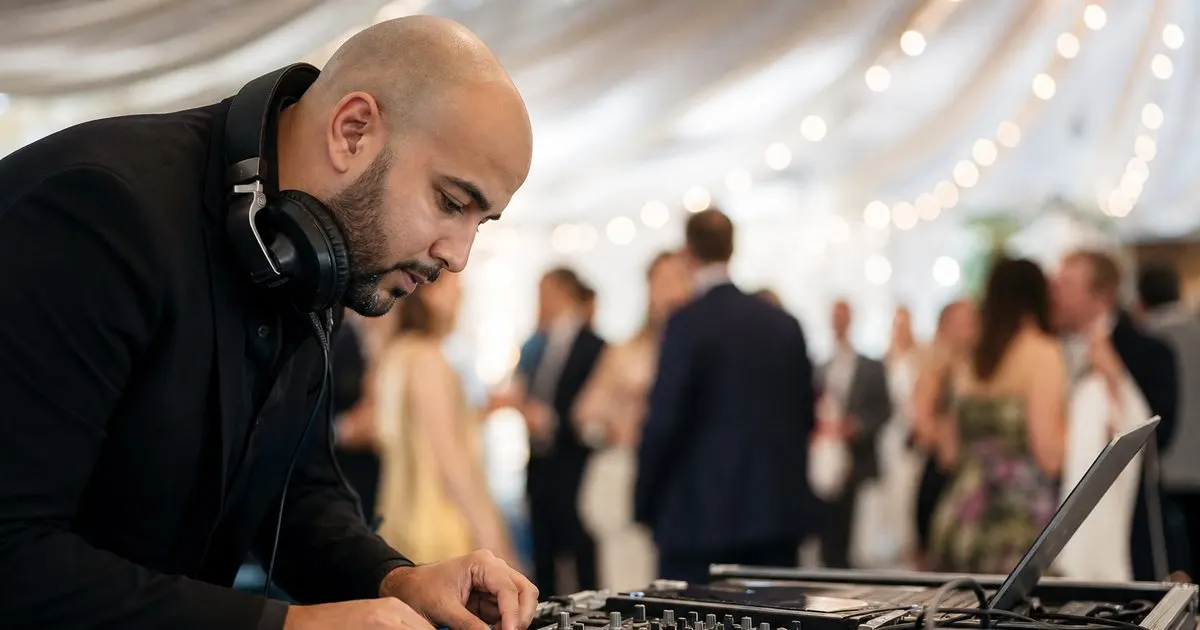
The DJ carries the room
At many events, the DJ or MC is the voice that moves the crowd from one moment to the next, so their timing shapes the whole flow.
If the person on the mic is unsure what comes next, the energy stalls, and the room feels the hesitation immediately.
Keep reading: How do event planners build a minute-by-minute run of show that actually keeps the day on schedule?, How can a planner share the event day timeline with every vendor so nobody works from an old version?, What is the best way to adjust an event timeline on the fly when the day is running late?. See how GigTimelinr helps you event day-of run-of-show timeline builder.
Seeing the whole day
A DJ needs more than their own set list. They need the full run of show to know when the toast, the meal, and the dances land.
With the whole timeline visible, the DJ can read the room and hit each transition at the right moment rather than guessing. Related: Why should every moment in an event run of show have a clearly assigned owner responsible for it?
Cues that keep it smooth
Specific cues, like the exact song for an entrance or the name to announce, let the DJ execute key moments flawlessly.
Those details on the timeline mean the DJ is never scrambling to confirm a name or a track while the crowd waits. Related: What details and cues should a run of show include beyond just the times for each event moment?
Adapting with confidence
When the day shifts, a DJ working from a shared, current timeline knows immediately how the flow has changed and adjusts smoothly. Related: How can a planner share the event day timeline with every vendor so nobody works from an old version?
That confidence keeps the energy up even when the schedule moves, because the person carrying the room always knows what comes next. Related: How do event planners build a minute-by-minute run of show that actually keeps the day on schedule?
- The DJ or MC shapes the whole event flow
- Seeing the full day lets the DJ time transitions
- Specific cues let the DJ execute key moments
- A current timeline lets the DJ adapt confidently

Julien Jimenez
Julien Jimenez is an independent software builder based in Paris. He designs, ships, and operates focused SaaS products for small businesses and independent professionals. Read the full author page.
Frequently asked questions
Why should a DJ see the whole timeline, not just their own portion?
Because a DJ sets the pace between moments. Knowing what precedes and follows each cue lets them line up transitions and announcements so the event never stalls between segments.
How does a current timeline help a DJ adapt to changes?
When the shared schedule updates in real time, the DJ sees new start times immediately and can shift a mix or announcement to match, instead of reacting to a moment that already passed.
A run of show that holds
Event day-of run-of-show timeline builder. GigTimelinr is built to help you put this into practice.
Build your run of showMore from the GigTimelinr blog
Get the GigTimelinr playbook
Practical guides on event production, straight to your inbox as we publish them. No spam, unsubscribe any time.