What details and cues should a run of show include beyond just the times for each event moment?
The notes that turn a bare schedule into a plan detailed enough for vendors to execute perfectly.
Beyond times, add the cue that triggers each moment, who owns it, the song or announcement involved, setup notes, and any warning about mistakes to avoid. These specifics turn a bare schedule into instructions detailed enough that vendors execute each moment correctly without stopping to ask what happens next.
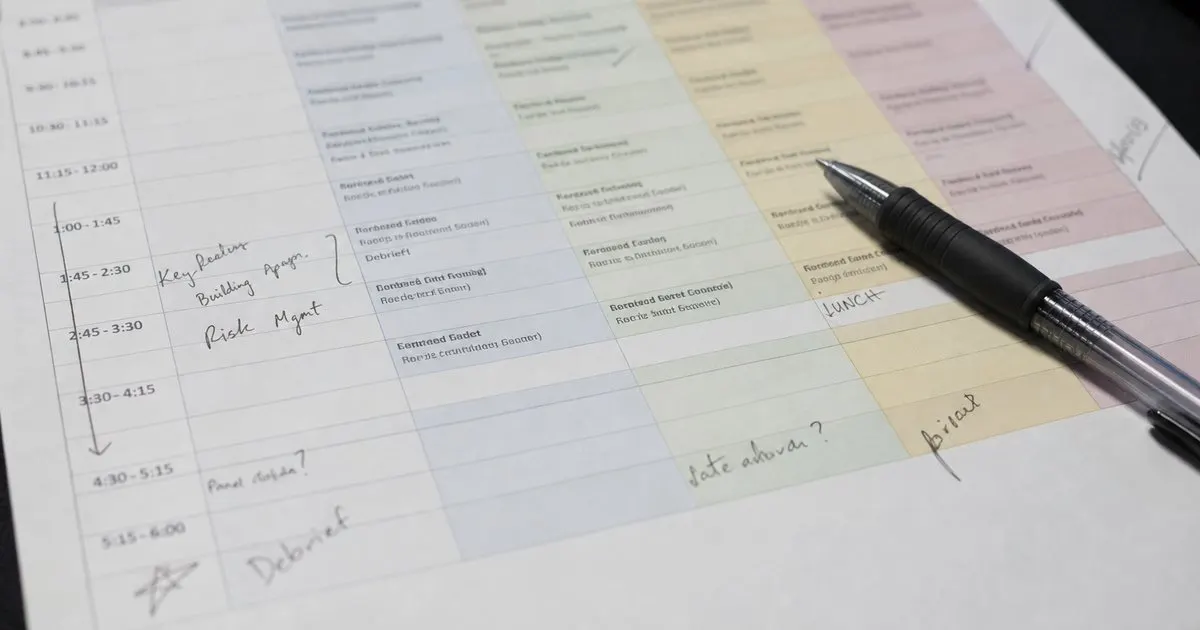
Times alone are not enough
A timeline that lists only times tells vendors when things happen but not how, which leaves the crucial details to memory and guesswork.
The difference between a good moment and a great one often lives in a small cue that a bare schedule simply does not capture. Related: How much buffer time should an event run of show include between the key moments of the day?
Keep reading: How do event planners build a minute-by-minute run of show that actually keeps the day on schedule?, How can a planner share the event day timeline with every vendor so nobody works from an old version?, What is the best way to adjust an event timeline on the fly when the day is running late?. See how GigTimelinr helps you event day-of run-of-show timeline builder.
Cues that guide the moment
Adding the specific cue, like the song for the entrance or which door the couple uses, tells vendors exactly what to do when a moment arrives.
These cues turn each block from a time into an instruction, so the DJ and the coordinator act on the same detailed plan.
Notes that prevent mistakes
A short note about a special request, a surprise, or a sensitivity keeps vendors from making an avoidable mistake at a key moment.
Capturing these on the block itself means the detail is right where the responsible vendor will see it, not buried in an old email. Related: Why should every moment in an event run of show have a clearly assigned owner responsible for it?
Enough detail to execute
The goal is a run of show detailed enough that a vendor could execute their part correctly even without asking a single question. Related: How do you coordinate a run of show across many vendors who have never worked together before?
When every moment carries its times, its owner, and its cues, the whole event can run from the plan rather than from constant coordination. Related: How can a planner share the event day timeline with every vendor so nobody works from an old version?
- Times alone leave the how to guesswork
- Specific cues turn blocks into instructions
- Notes prevent avoidable mistakes at key moments
- Enough detail lets vendors execute without asking

Julien Jimenez
Julien Jimenez is an independent software builder based in Paris. He designs, ships, and operates focused SaaS products for small businesses and independent professionals. Read the full author page.
Frequently asked questions
What is the difference between a time and a cue?
A time says when something is scheduled. A cue names the trigger that starts it, such as the song ending or the host finishing a line, which keeps a moment on track even when the clock drifts.
Should notes warn about likely mistakes?
Yes. A short note like naming who to introduce or which entrance to use prevents predictable errors at key moments and saves a vendor from guessing under pressure.
A run of show that holds
Event day-of run-of-show timeline builder. GigTimelinr is built to help you put this into practice.
Build your run of showMore from the GigTimelinr blog
Get the GigTimelinr playbook
Practical guides on event production, straight to your inbox as we publish them. No spam, unsubscribe any time.