How do you coordinate a run of show across many vendors who have never worked together before?
Aligning a first time vendor team around one shared plan so an unfamiliar group runs like a unit.
Give the unfamiliar team one shared timeline that spells out every moment, its owner, and its cue. When each vendor can see the whole day and their exact role in it, a first time group acts like a coordinated unit, and you conduct the flow instead of relaying updates constantly.
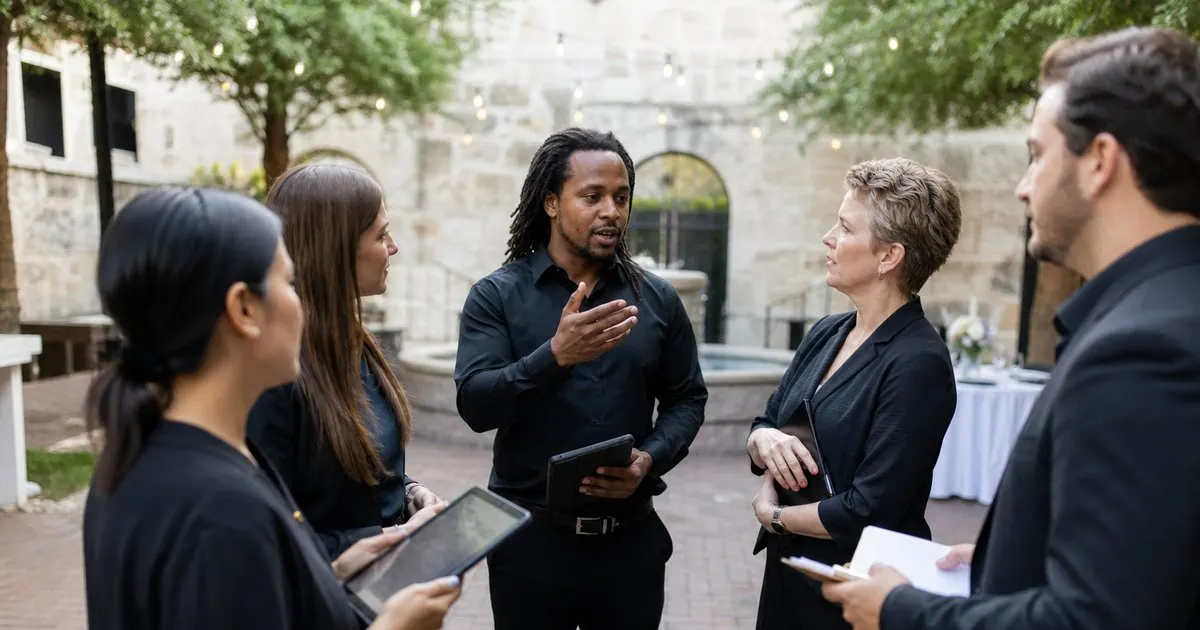
Strangers running one day
Many events bring together a DJ, a caterer, a photographer, and others who have never worked as a team, yet must run one day flawlessly.
Without a shared plan, this group of strangers has to coordinate on the fly, which is where handoffs get dropped and moments collide.
Keep reading: How do event planners build a minute-by-minute run of show that actually keeps the day on schedule?, How can a planner share the event day timeline with every vendor so nobody works from an old version?, What is the best way to adjust an event timeline on the fly when the day is running late?. See how GigTimelinr helps you event day-of run-of-show timeline builder.
A shared plan aligns them
A single run of show gives an unfamiliar team one common reference, so they act as a unit despite never having met before.
Each vendor sees how their part fits the whole, which lets them anticipate handoffs rather than being surprised by them.
Reducing the need to ask
When the timeline carries owners and cues, vendors find their answers in the plan instead of interrupting each other during the event. Related: How do event planners build a minute-by-minute run of show that actually keeps the day on schedule?
That self sufficiency matters most with a first time team, who lack the shorthand that vendors who work together often develop.
The planner as conductor
With everyone on a shared plan, the planner conducts rather than micromanages, trusting each vendor to play their part on cue. Related: How can a planner share the event day timeline with every vendor so nobody works from an old version?
That coordination, built on a plan everyone shares, is what makes an unfamiliar team feel seamless to the guests they serve.
- Events often unite vendors who never met
- A shared plan makes strangers act as a unit
- Owners and cues reduce mid event interruptions
- A shared plan lets the planner conduct, not micromanage

Julien Jimenez
Julien Jimenez is an independent software builder based in Paris. He designs, ships, and operates focused SaaS products for small businesses and independent professionals. Read the full author page.
Frequently asked questions
How do you reduce mid event questions from vendors who just met?
Put owners and cues on the shared timeline so each vendor already knows what they do and when. Most interruptions come from missing information, not from the people themselves.
What is the planner's role when the vendors are strangers?
You become the conductor. A single clear plan lets an unfamiliar group follow the same script, so you guide the overall flow rather than manage each person's tasks.
A run of show that holds
Event day-of run-of-show timeline builder. GigTimelinr is built to help you put this into practice.
Build your run of showMore from the GigTimelinr blog
Get the GigTimelinr playbook
Practical guides on event production, straight to your inbox as we publish them. No spam, unsubscribe any time.