How do event planners build a minute-by-minute run of show that actually keeps the day on schedule?
Turning a rough plan into a timeline detailed enough to run a real event moment by moment.
Planners start with the fixed anchors like ceremony and meals, then fill every gap with short labeled blocks that each carry a duration. Because block lengths drive the clock, adding or moving one recalculates the rest, so the finished timeline reads as a precise script the whole day can follow.
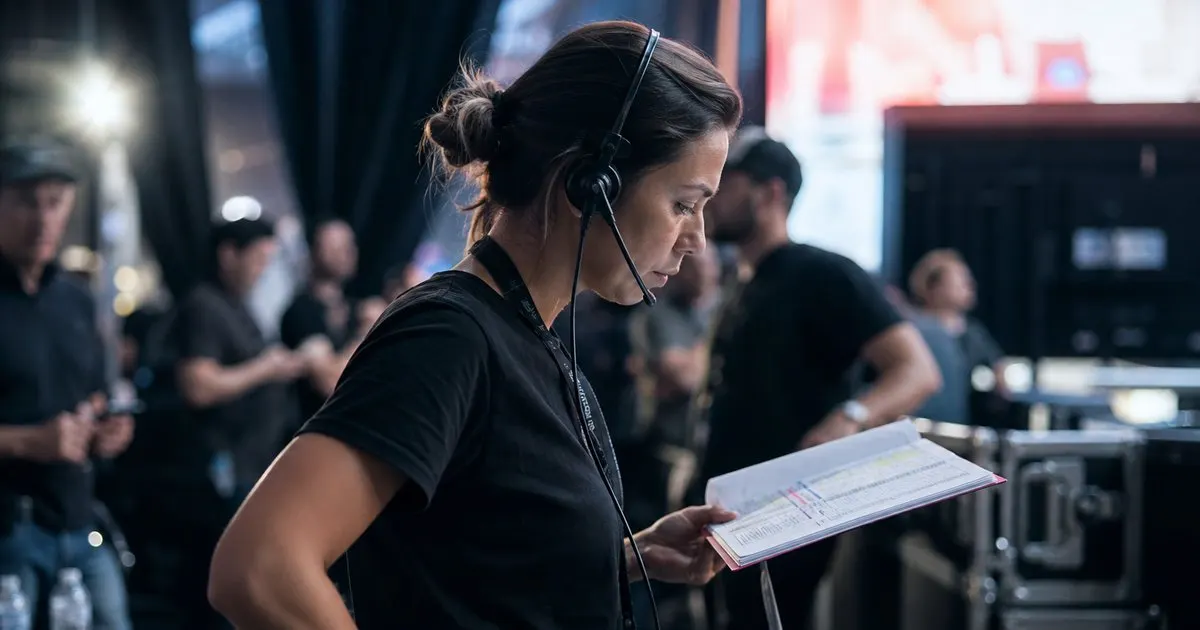
A rough plan is not a run of show
A general schedule with a few time blocks leaves too much unsaid, and the gaps are exactly where an event day falls apart. Related: How can a planner share the event day timeline with every vendor so nobody works from an old version?
A real run of show breaks the day into precise moments with owners and cues, so nothing depends on someone improvising in the moment. Related: Why should every moment in an event run of show have a clearly assigned owner responsible for it?
Keep reading: How can a planner share the event day timeline with every vendor so nobody works from an old version?, What is the best way to adjust an event timeline on the fly when the day is running late?, Why should every moment in an event run of show have a clearly assigned owner responsible for it?. See how GigTimelinr helps you event day-of run-of-show timeline builder.
Blocking the day precisely
Building the timeline means adding each moment as a block with a start time and a length, from setup through the final teardown. Related: What details and cues should a run of show include beyond just the times for each event moment?
That precision forces you to think through the whole day in advance, which is where you catch the conflicts and gaps early.
Times that add up
When each block has a length, the timeline can recalculate the following times automatically, so the schedule always stays consistent.
That means when you adjust one block, you instantly see how it ripples through the rest of the day, rather than doing the math by hand.
A plan the day can follow
A detailed run of show becomes the script everyone follows, turning a chaotic day into a series of known, scheduled moments. Related: How does a detailed run of show help a DJ or MC keep an event flowing from start to finish?
With the day mapped this thoroughly, the coordinator spends the event guiding a plan rather than inventing one on the fly.
- A few time blocks are not a run of show
- Precise blocking reveals conflicts early
- Block lengths let times recalculate automatically
- A detailed timeline becomes the day's script

Julien Jimenez
Julien Jimenez is an independent software builder based in Paris. He designs, ships, and operates focused SaaS products for small businesses and independent professionals. Read the full author page.
Frequently asked questions
How detailed should each timeline block be?
Detailed enough that a vendor could run it without asking questions. Give each block a clear label, a start time, and a duration rather than lumping long stretches into one vague entry.
What happens to later times when one block changes?
When block lengths drive the schedule, editing a single duration automatically shifts every following start time. You avoid rebuilding the whole timeline by hand and reduce the chance of a math error.
A run of show that holds
Event day-of run-of-show timeline builder. GigTimelinr is built to help you put this into practice.
Build your run of showMore from the GigTimelinr blog


Get the GigTimelinr playbook
Practical guides on event production, straight to your inbox as we publish them. No spam, unsubscribe any time.