What should a planner do when the caterer's service timing conflicts with the program on the run of show?
The kitchen works to fire times and the program works to moments, and the two rarely agree on the first draft. Here is how to reconcile them so food arrives hot and the toasts still happen.
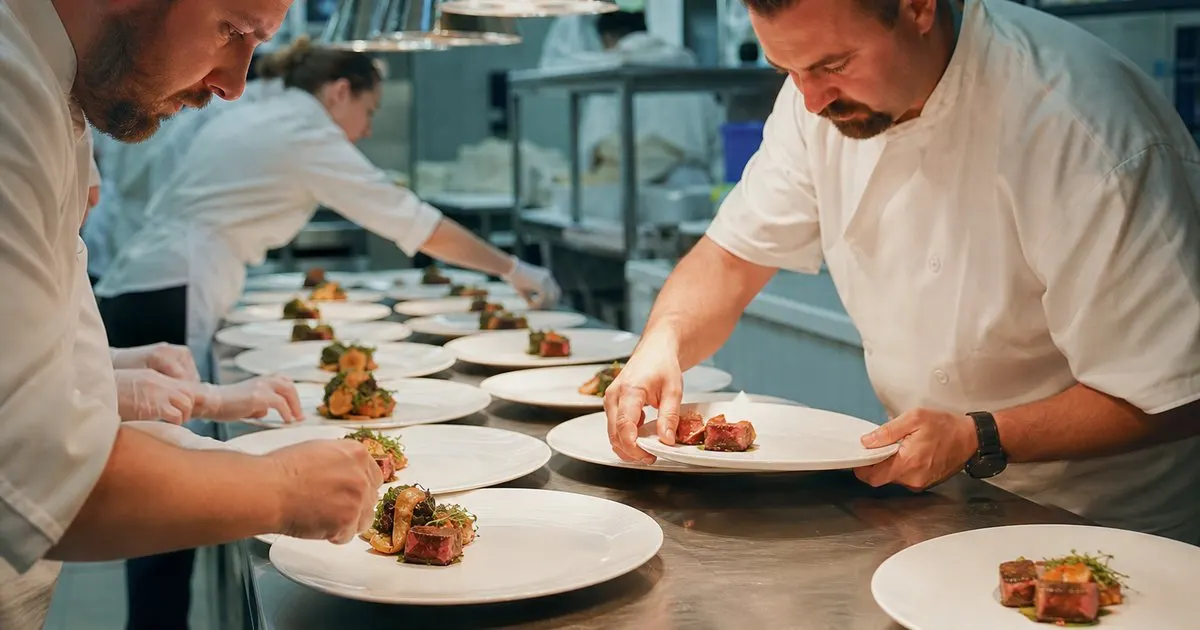
Understanding how the kitchen actually reads a timeline
Most planners write a run of show from the guest's point of view: cocktail hour, seated, welcome, salad, toasts, entree, dance. The caterer reads the same document and translates it into fire times, which are the moments the kitchen commits to cooking or plating a course for the full room. A fire time is a point of no return. Once two hundred plates are plated, they are going out, whether or not the best man has finished his speech. Related: How do event planners build a minute-by-minute run of show that actually keeps the day on schedule?
The conflict usually appears because the planner's document has moments where the kitchen needs windows. 'Toasts, 7:30' tells the caterer nothing about how long the toasts run, and if the answer is anywhere from ten to forty minutes, the kitchen cannot pick a fire time for the entree. The fix begins with translating the program into the kitchen's language: for each course, when can the room be ready for it, and what is the latest the kitchen can hold it.
Keep reading: How do event planners build a minute-by-minute run of show that actually keeps the day on schedule?, How can a planner share the event day timeline with every vendor so nobody works from an old version?, What is the best way to adjust an event timeline on the fly when the day is running late?. See how GigTimelinr helps you event day-of run-of-show timeline builder.
The three most common collisions and how to resolve each
The first collision is toasts versus entree. The reliable fix is to fire the entree at a fixed time and schedule toasts to begin as soon as the entree is down, so speeches happen while people eat rather than while they wait. Some clients resist this; explain that the alternative is cold food, and that guests will listen to a toast over dinner far more happily than over an empty plate. The second collision is the first dance or a formal moment placed between courses, which extends the gap and forces the kitchen to hold. Move it to before the first course or after the last.
The third collision is the room flip or a program that keeps guests standing during a window the caterer needs them seated. Passed appetizers during a long cocktail hour work; a plated salad on a table nobody is sitting at does not. For buffet and station service, the collision is different: the line takes longer than the planner budgeted, and the program moment scheduled for 'after dinner' begins while a third of the room is still in line. Ask the caterer how long they expect the line to take for the headcount and write that number down as the dinner duration. Related: How can a planner share the event day timeline with every vendor so nobody works from an old version?
Building the reconciled dinner block together
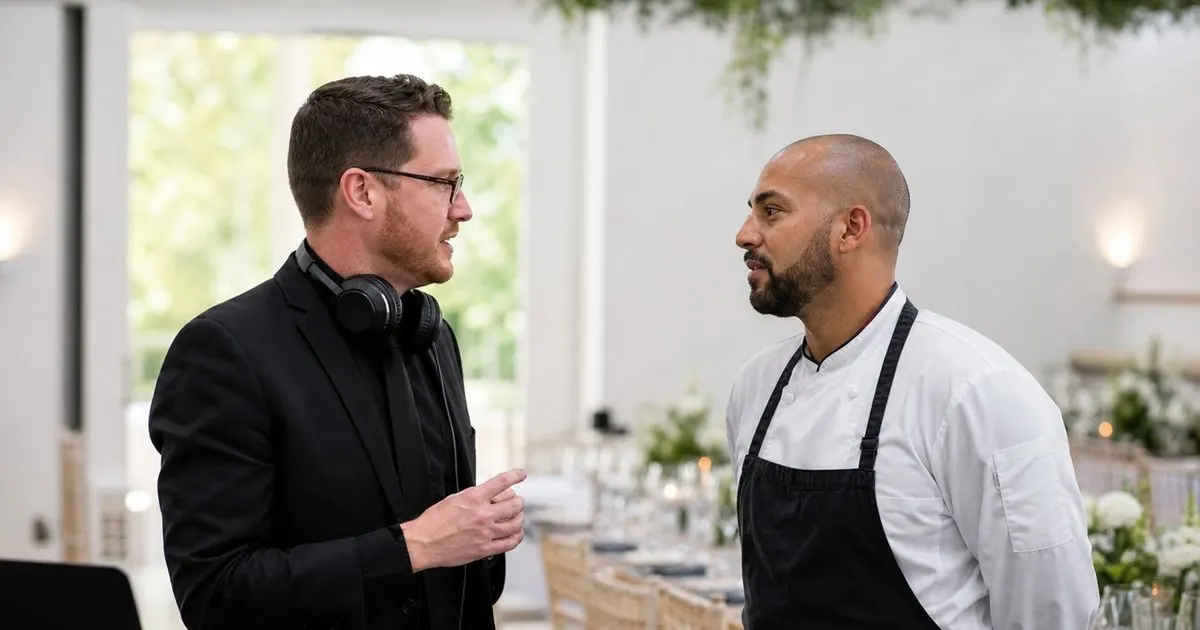
The most effective way to resolve these is a short call with the catering lead specifically about the dinner block, ideally after the draft program exists and before the lock date. Walk the sequence line by line, and for each program moment ask what the kitchen is doing at that time. Write the answers into the run of show as parallel lines: 'Kitchen fires salad, 6:50' next to 'Guests seated, 6:55', so both teams can see the dependency. Related: Why should every moment in an event run of show have a clearly assigned owner responsible for it?
Agree on a hold rule for each course: how long the kitchen can hold it without quality loss, and what happens if the program overruns past that. For most plated service the honest answer is a few minutes, not twenty. Once the caterer knows the rule is written down, they can commit to fire times with confidence, and the planner knows exactly which program items are protected and which are flexible around the food. Related: What details and cues should a run of show include beyond just the times for each event moment?
On the night: who calls the kitchen and when
Even a perfectly reconciled dinner block needs a live link between the room and the kitchen. Assign one person, typically the lead planner or the banquet captain, as the only voice that gives the kitchen a go. Write that name into the run of show, with the cue phrasing, so nobody else on a radio triggers a fire time by accident. The captain should be watching the toasts, not the clock, and the kitchen should be listening to the captain, not guessing from the noise.
Build a standing check-in into the timeline: five minutes before each fire time, the captain confirms the room is where it should be, and if it is not, the kitchen holds or the planner cuts. In our experience building GigTimelinr, the events that get this right are the ones that treat the catering lead as a co-author of the dinner block rather than a recipient of it. The kitchen is not trying to rush the party; it is trying to serve the food the client tasted and paid for.
- Translate program moments into kitchen fire times and hold windows so the caterer can commit to times.
- Fire the entree at a fixed time and start toasts once plates are down rather than holding food for speeches.
- Write kitchen lines alongside program lines in the run of show so both teams see the dependency.
- Name one person who calls each course, with a check-in five minutes before every fire time.

Julien Jimenez
Julien Jimenez is an independent software builder based in Paris. He designs, ships, and operates focused SaaS products for small businesses and independent professionals. Read the full author page.
A run of show that holds
Event day-of run-of-show timeline builder. GigTimelinr is built to help you put this into practice.
Build your run of showMore from the GigTimelinr blog
Get the GigTimelinr playbook
Practical guides on event production, straight to your inbox as we publish them. No spam, unsubscribe any time.